Running costs
What a food processor actually costs to run
Electricity is pennies a year. The machine spread over the uses you get from it is the real number, and it swings by a factor of ten on how often you use it.
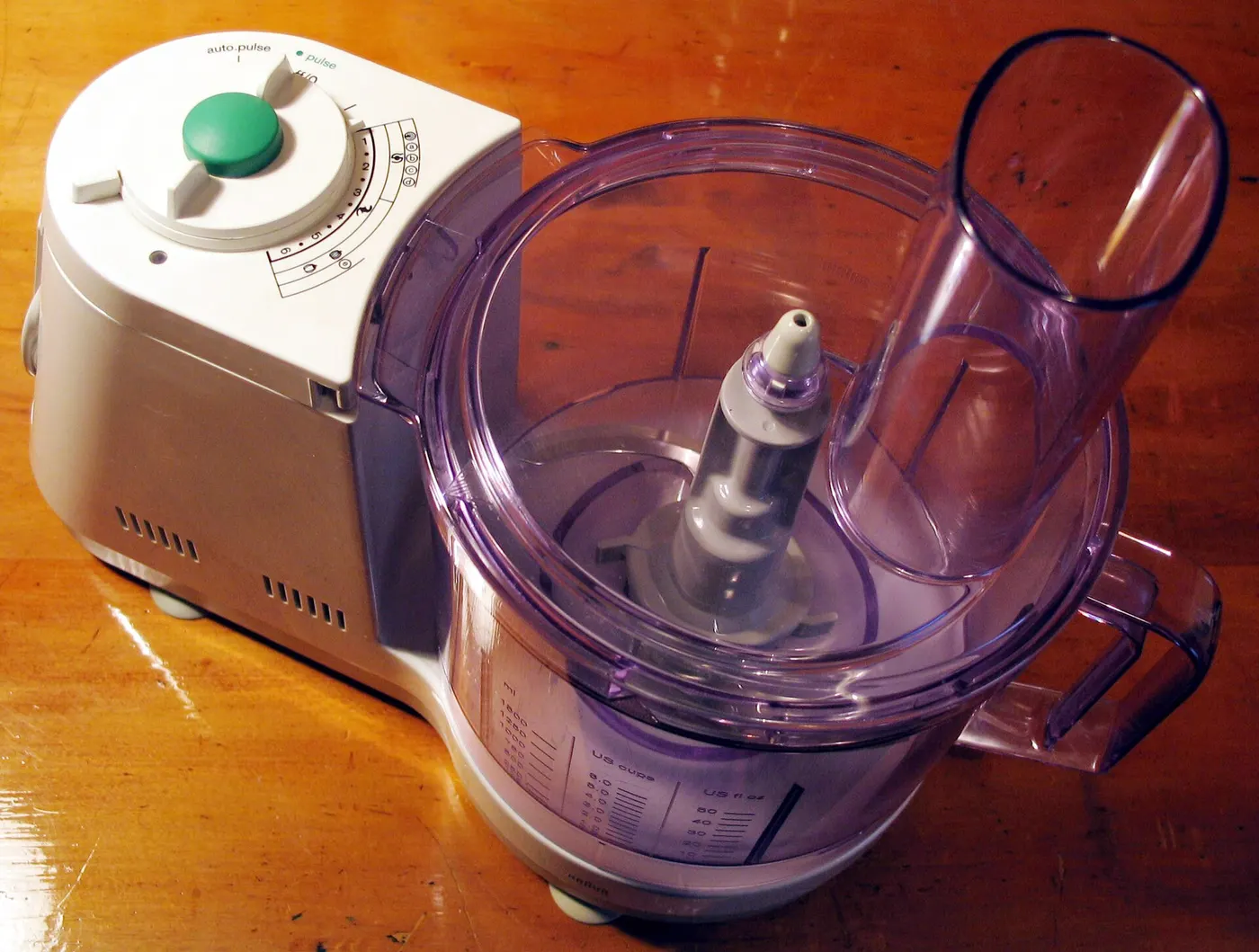
People worry about the wattage on the box and ignore the number that actually decides what a countertop appliance costs them. The electricity a food processor uses in a year is a rounding error; the price divided by the uses you get out of it is not.
This guide works through both with the arithmetic shown, using the published average residential electricity price rather than a guess. Appliance prices are example figures, said so in the same sentence, because this site runs no price feed and quotes no seller.
Electricity first, because it is the number people over-weight
The U.S. Energy Information Administration publishes average retail electricity prices by sector in its Electric Power Monthly tables, and the most recent residential figure in that table is 18.16 cents per kilowatt-hour for August 2026. That is the rate used throughout this guide, and your own bill is better still, because residential rates differ substantially by state and by plan.
A 600 W machine running 3 minutes a day draws 0.03 kWh a day, which is 10.95 kWh a year. At 18.16 cents that is about $1.99 a year. Even a 1,000 W machine running 5 minutes a day comes to about 30.4 kWh and $5.52 a year.
Per use, that is close to nothing. Three minutes at 600 W is 0.03 kWh, which costs about half a cent. Any decision made on wattage alone is a decision made on the smallest line in the budget.
| Rated power and daily run time | kWh per year | Cost per year |
|---|---|---|
| 450 W for 2 minutes a day | 5.48 kWh | about $1.00 |
| 600 W for 3 minutes a day | 10.95 kWh | about $1.99 |
| 1,000 W for 5 minutes a day | 30.42 kWh | about $5.52 |
Rated power is a maximum and a motor under light load draws less, so a plug-in meter will usually read below this arithmetic. The rate is the published residential average for August 2026; use your own tariff instead.
The machine spread over the uses it gets
Three uses a week is 156 uses a year. A $160 machine kept 5 years covers 780 uses, which is about 20.5 cents of machine per use. That is roughly 38 times the half-cent of electricity, and it is the number that actually responds to a buying decision.
The same machine kept 10 years covers 1,560 uses at about 10.3 cents, and kept only 3 years it covers 468 uses at about 34.2 cents. Three outcomes, one appliance, and the only variable is how long it survives and keeps getting used.
Frequency moves it just as hard. The same $160 machine used twice a month for 5 years covers 120 uses, which is about $1.33 a use, more than six times the figure at 3 uses a week. An appliance that lives in a cupboard is expensive per use even when it was cheap to buy.
| Machine price | Kept 3 years, 468 uses | Kept 5 years, 780 uses | Kept 10 years, 1,560 uses |
|---|---|---|---|
| $60 | $0.128 | $0.077 | $0.038 |
| $160 | $0.342 | $0.205 | $0.103 |
| $350 | $0.748 | $0.449 | $0.224 |
Each cell is the price divided by 156 uses a year multiplied by the years, with no resale subtracted. The cost-per-serving calculator on this site takes your own frequency and price.
What ends a machine early, and what it costs to prevent
Food processors rarely die of motor failure. They die when a bowl cracks, when a bowl handle snaps off at the lug, or when the lid interlock wears to the point where the motor will not start, and on a machine with no spare parts any one of those is the end.
Price that as a fork in the arithmetic. On the $160 example, a bowl replaced at an example $35 at year 3 carries the machine from 468 uses to 780 and takes the per-use figure from 34.2 cents to about 25.0 cents. The same break with no bowl available ends the machine at 34.2 cents a use and sends you back to the shop.
The prevention is cheap and boring. Do not put the bowl in a hot dishwasher cycle if the manual says hand wash, do not lever the lid off against the lug, and do not store the bowl with the lid locked, because the latch takes a set. Our maintenance guide covers the cleaning routine that protects all three.
| Scenario | Total spent | Uses delivered | Cost per use |
|---|---|---|---|
| Bowl cracks at 3 years, no spare available | $160 | 468 uses | $0.342 |
| Bowl cracks at 3 years, replaced at $35 | $195 | 780 uses | $0.250 |
| Nothing breaks, kept 10 years | $160 | 1,560 uses | $0.103 |
| Bowl and blade replaced once at $60 total, kept 10 years | $220 | 1,560 uses | $0.141 |
Part prices are example figures. The point is the ratio rather than the amount: a $35 part that doubles the uses delivered cuts the cost per use by about 27%.
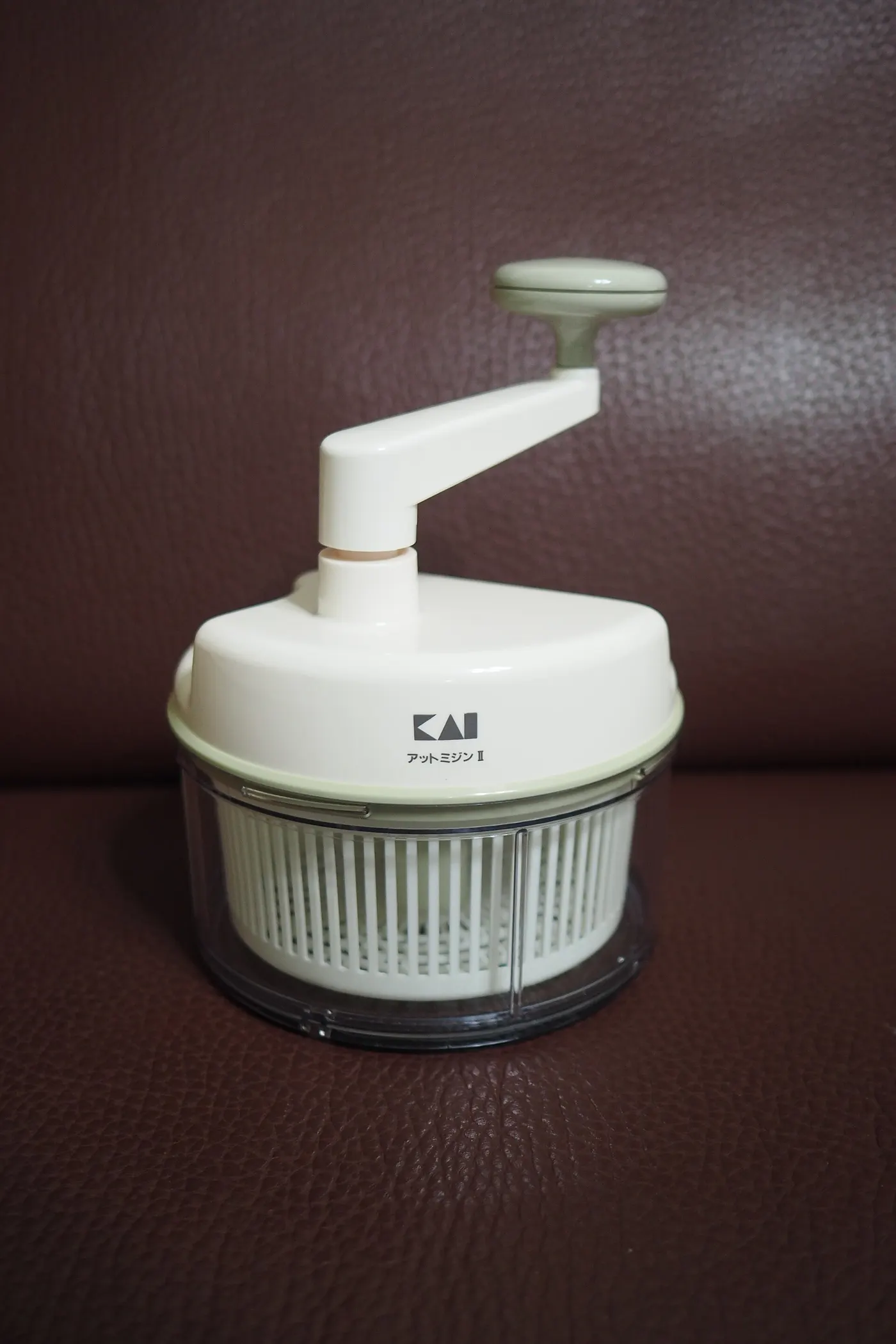
The no-electricity option, costed the same way
A hand-cranked chopper has no motor, no cord and no running cost at all. At an example $30 used twice a week over 5 years it covers 520 uses, which is about 5.8 cents a use, well under a third of the $160 electric machine at its own best frequency.
What it cannot do is slice, grate, make pastry or handle volume, so the comparison is only fair for the chopping job. For a household that chops and nothing else, the arithmetic is decisive and the counter space saved is a second dividend that no spreadsheet captures.
The honest way to use both numbers is to split your month's jobs between them. If 8 of your 12 monthly sessions are chopping, a $30 chopper covers two thirds of the work and the question becomes whether the remaining 4 sessions justify a $160 machine on the counter.
Putting the lines together
On the central example, a $160 machine kept 5 years at 3 uses a week, the total is about 20.5 cents of machine plus about half a cent of electricity, which is about 21 cents a use. Electricity is 2.6% of that.
Change one input at a time and the ranking never moves. Frequency is the largest lever, years kept is second, purchase price is third and electricity is last by two orders of magnitude. A cheaper machine does not rescue an appliance you will not use, and an expensive one does not ruin one you use daily.
The practical conclusion is to count uses before you count dollars. Run the cost-per-serving calculator on this site with your own honest monthly count, and the right price band falls out of it rather than being chosen in a shop.
It also reframes what an upgrade is. Moving from a $60 machine to a $350 one adds about 37 cents a use at 5 years, which is roughly 75 times the entire electricity bill for that use, and it buys capacity, blade quality and a parts list rather than efficiency. Spending the same difference on nothing and simply using a cheaper machine twice as often halves its cost per use instead. Both are legitimate choices, and the arithmetic above is the only way to see which one you are actually making before the money leaves.
- $160 machine, 5 years, 3 uses a week: about $0.205 of machine a use
- Electricity at 600 W for 3 minutes: about $0.005 a use, or about $1.99 a year
- All in, about $0.21 a use, of which electricity is about 2.6%
- The same machine used twice a month: about $1.33 a use, more than six times as much
- A $35 replacement bowl at year 3 cuts the per-use figure by about 27%
Before you buy
- Find the cents per kilowatt-hour figure on your own electricity bill
- Read the rated power from the machine plate rather than from the box
- Count your honest monthly uses and multiply by 12 for the annual figure
- Divide the price by the uses you expect over the years you expect to keep it
- Price a replacement bowl and blade before you buy, not after one breaks
- Re-run the division after a year using the uses you actually made
Questions readers ask
- Does a higher wattage machine cost much more to run?
- Hardly anything in absolute terms. A 450 W machine running 2 minutes a day costs about $1.00 a year at the published 18.16 cents per kWh rate, and a 1,000 W machine running 5 minutes a day costs about $5.52. The difference is about $4.52 a year, which is less than a quarter of one use of the machine on the purchase-price line.
- Where do I find my own electricity rate?
- On your own bill, in cents per kilowatt-hour, which is better than any national figure because residential rates differ substantially by state and by plan. The 18.16 cents used here is the residential average for August 2026 published by the Energy Information Administration, and it is a starting point rather than your number.
- Is a more expensive machine cheaper per use in the long run?
- Only if it lasts proportionally longer. The $350 example kept 10 years is about 22.4 cents a use and the $60 example kept 10 years is about 3.8 cents, so the expensive machine has to survive nearly six times as long just to draw level. Pay for a parts supply rather than for finish.
- Should I count washing-up in the running cost?
- In time rather than money, and it is worth doing. Our maintenance guide works out that cleaning a bowl, lid and blade in 3 minutes rather than 90 seconds costs about 3.9 hours a year at 156 uses. That is the real tax on a machine with awkward parts, and it is why people stop using them.
- Is an ENERGY STAR model available?
- No. ENERGY STAR certifies dishwashers, refrigerators, freezers, clothes washers and dryers, dehumidifiers, air cleaners and electric cooking products, and has no category for food processors or other small countertop prep appliances. There is therefore no efficiency label to compare between models.
Sources
Some links on this site can earn us a commission. That does not change which product a guide recommends, and it adds nothing to your price. Advertising is not enabled on this site yet. When it is, ads will be labelled and kept visually separate from the guides.