Maintenance
Keeping a food processor working for ten years
Bowls crack, handles snap at the lug and lids stop latching. The cleaning routine and the three habits that decide whether a machine reaches year ten.
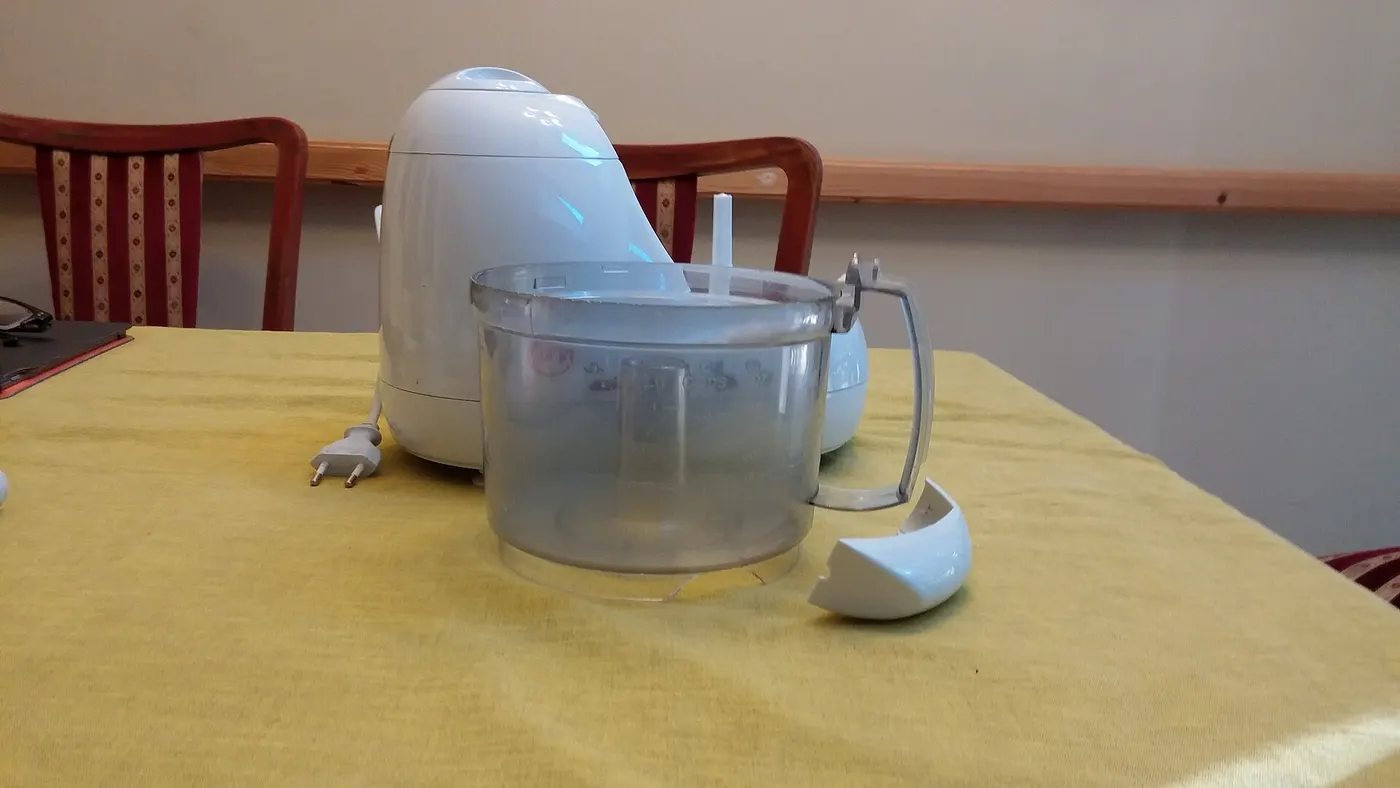
Food processors are almost never thrown out because the motor failed. They are thrown out because a bowl cracked, a handle snapped at the lug, a lid stopped latching, or because cleaning the thing became annoying enough that it moved to a cupboard and never came back.
This guide covers the routine that prevents all four, the food safety rules that set the timing, and what to do when a part does break. Prices are example figures, labelled as such in the same sentence; this site runs no price feed and quotes no seller.
Clean it immediately, and the clock is a food safety one
The timing is not a preference. The Centers for Disease Control and Prevention describes a danger zone between 40°F and 140°F in which bacteria multiply rapidly, and advises never leaving perishable food out for more than 2 hours, or 1 hour if it is exposed to temperatures above 90°F. A bowl of chopped chicken or a blade coated in raw egg is perishable food left out.
The same agency advises washing hands for at least 20 seconds with soap and warm or cold water, which is the step people skip between handling raw ingredients and reassembling a clean machine. Twenty seconds is longer than it feels; count it.
The practical rule that comes out of this is to rinse the bowl, lid and blade the moment the batch leaves the machine, before anything else happens in the meal. Dried purée in the blade hub is the single hardest thing to get out of a processor, and it is created in the twenty minutes you spent eating.
- Tip the batch out and rinse the bowl, lid and blade under running water straight away
- Wash hands for at least 20 seconds between raw ingredients and the clean machine
- Do not leave perishable food in the bowl for more than 2 hours, or 1 hour above 90°F
- Dry the blade immediately rather than letting it drain, because the hub holds water
- Store the bowl with the lid loose on top, never latched
The cleaning routine is the real tax on the machine
At 3 uses a week, 156 uses a year, a 3 minute clean-up is 468 minutes, which is 7.8 hours a year. A 90 second clean-up is 234 minutes, or 3.9 hours. The difference is 3.9 hours a year, and it is almost entirely a matter of whether the food dried on.
The routine that gets to 90 seconds is short. Fill the bowl a third with warm water and a drop of detergent, put the lid on, pulse for 5 seconds, tip it out, rinse. That gets everything except the blade hub and the underside of the lid, which take a brush and about 20 seconds more.
The parts that need a hand are the ones with a seam: the pusher sleeve, the lid rim where the latch lives, and the gap under the blade where it sits on the spindle. Those three are where food accumulates invisibly, and a machine that smells is a machine with food in one of them.
| Clean-up per use | Minutes per year | Hours per year |
|---|---|---|
| 90 seconds, rinsed immediately | 234 minutes | 3.9 hours |
| 3 minutes, washed after the meal | 468 minutes | 7.8 hours |
| 6 minutes, food dried on | 936 minutes | 15.6 hours |
Clean-up times are planning figures for your own budgeting rather than measurements we have taken. The arithmetic is 156 uses multiplied by the time in the first column.
What actually breaks, and how to stop it
The bowl handle is the usual casualty, and it snaps at the lug where it is moulded into the bowl wall. The cause is almost always levering: holding the handle and twisting the bowl free of the base, or pulling the lid off against the handle instead of turning it.
Lids fail at the latch tab, and the fastest way to wear one out is to store the bowl with the lid locked on. The tab takes a permanent set over months of compression and then stops engaging the interlock, at which point the motor will not start and the machine looks dead when only a $20 lid is dead.
Bowls craze and then crack, and the usual cause is heat. A hot dishwasher cycle on a bowl the manual says to hand wash puts fine cracks across the plastic that spread under load, and a bowl that goes cloudy is already on that path. Check the manual for which parts are dishwasher safe and on which rack, and follow it exactly.
| Part | How it fails | What causes it | Example replacement cost |
|---|---|---|---|
| Bowl handle | Snaps off at the moulded lug | Levering the bowl or the lid against the handle | $35, if a bowl is sold separately |
| Lid latch tab | Takes a set and stops engaging the interlock | Storing the bowl with the lid locked on | About $20 |
| Work bowl | Crazes, goes cloudy, then cracks | Dishwasher heat on a hand-wash part | $35 |
| Blade | Dulls and the hub seal perishes | Dried food in the hub, dishwasher cycles | About $25 |
Replacement costs are example figures showing the order of magnitude. On a machine with no spare parts supply, every row in this table is the end of the machine instead.
The motor, the interlock and the thermal cutout
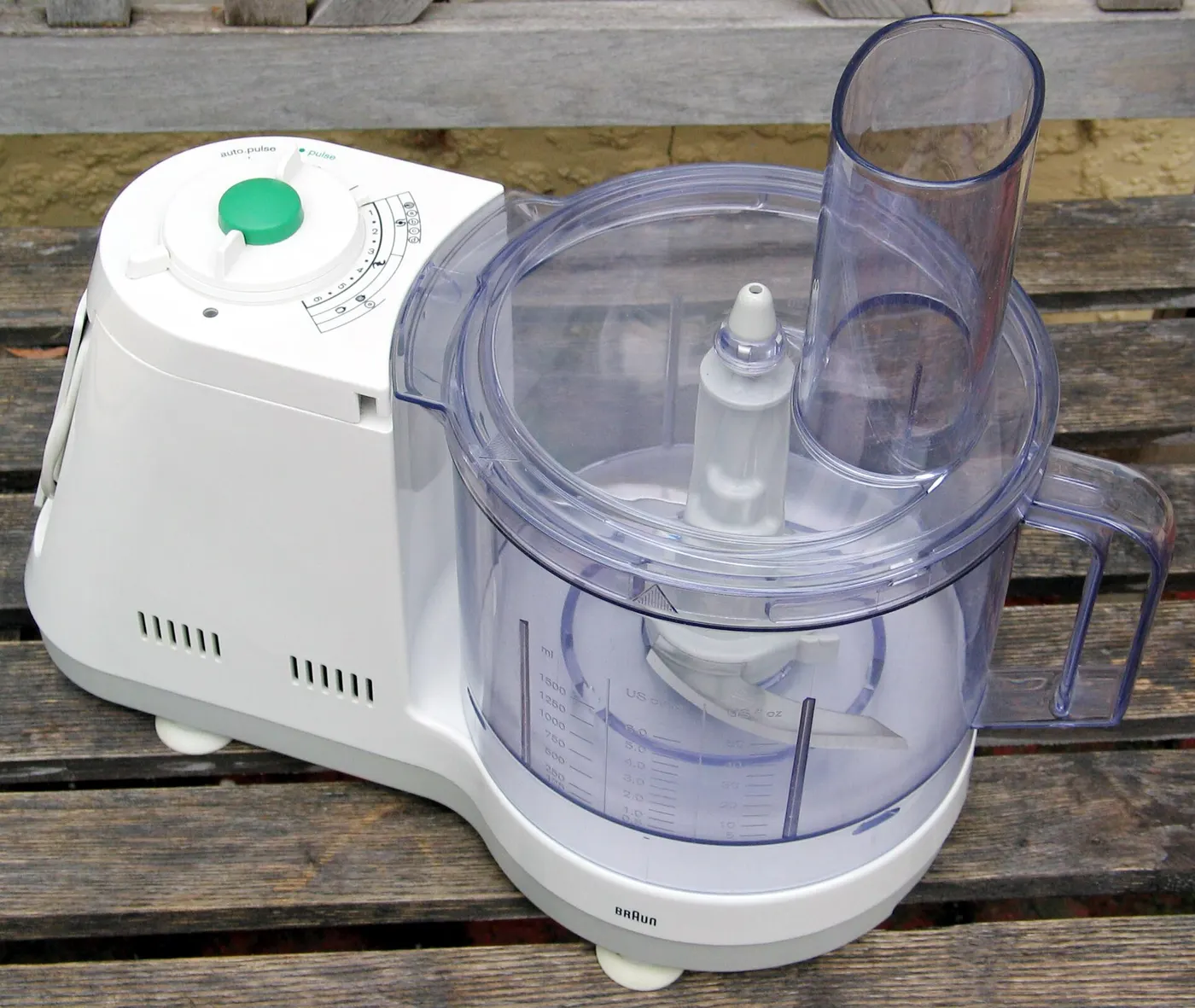
A processor motor is protected by an interlock that stops it running unless the bowl is seated and the lid is latched, and usually by a thermal cutout that stops it when it overheats. A machine that will not start is far more often an interlock problem than a motor problem, and the fix is to reseat the bowl and check the latch tab rather than to buy a machine.
A machine that stops mid-batch and will not restart for twenty minutes has tripped its thermal cutout, which means the load was too stiff or the batch too large for the motor. Let it cool fully, then do the same job in two smaller batches rather than one.
Stiff dough is where this happens. A bowl filled to its nominal capacity with bread dough is heavier work than the same bowl filled with vegetables, which is why the manual gives a separate, much lower maximum for dough. Treat that figure as the real capacity for anything that resists the blade.
When a part does break
Find the model number on the base before anything else, because manufacturers sell parts by model and a machine generation apart takes a different bowl. It is stamped on the underside or on a plate at the back, and photographing it once saves repeating the search.
Check the recall database at the same time. The Consumer Product Safety Commission maintains a searchable recall and safety warning database that it states updates weekly, filterable by product category, hazard, date range and remedy type, and a remedy of repair, replacement or refund is sometimes available long after the announcement.
Then do the arithmetic before you decide. On the figures in our running-cost guide, a $35 bowl on a $160 machine at year 3 takes the cost per use from about 34.2 cents to about 25.0 cents, which is a 27% improvement for $35. A machine with no parts available is a different decision, and knowing that before you buy is why the parts list belongs in the purchase.
- Photograph the model plate on the base and keep the picture
- Search the manufacturer support pages for that exact model number
- Search the Consumer Product Safety Commission recall database for the product category
- Price the part and divide it across the uses it will add before deciding
- If no part exists, treat the machine as finished and buy the next one on its parts list
Before you buy
- Rinse the bowl, lid and blade immediately after tipping out the batch
- Wash hands for at least 20 seconds between raw ingredients and the clean machine
- Never leave perishable food in the bowl beyond 2 hours, or 1 hour above 90°F
- Store the bowl with the lid loose on top rather than latched
- Read the manual for which parts are dishwasher safe and on which rack
- Brush the pusher sleeve, the lid rim and the blade hub once a week
- Photograph the model plate on the base and keep it with your receipts
- Search the recall database for the product category once a year
Questions readers ask
- Can the bowl go in the dishwasher?
- Only if the manual says so, and usually only on the top rack. Dishwasher heat crazes plastic that was not specified for it, and a bowl that has gone cloudy is already cracking at a scale you cannot see. A bowl at an example $35 is the most commonly replaced part on a processor, and heat is the usual reason.
- How long can food sit in the bowl?
- The Centers for Disease Control and Prevention advises never leaving perishable food out for more than 2 hours, or 1 hour if it is exposed to temperatures above 90°F, because bacteria multiply rapidly in the danger zone between 40°F and 140°F. A bowl of chopped raw ingredients is perishable food left out, so rinse it straight away.
- My machine will not start. Is the motor dead?
- Usually not. The interlock stops the motor unless the bowl is seated and the lid is latched, and a worn latch tab is the common cause. Reseat the bowl, check the tab for a permanent set, and if it has taken one, a replacement lid at an example $20 is the repair rather than a new machine.
- Why does my processor smell even after washing?
- Food is sitting in one of the three seams: the pusher sleeve, the lid rim where the latch lives, or the gap under the blade where it meets the spindle. Those need a brush rather than a rinse. Add about 20 seconds to the routine to do all three and the smell goes.
- How do I make clean-up fast enough that I keep using it?
- Fill the bowl a third with warm water and a drop of detergent, lid on, pulse for 5 seconds, tip it out and rinse. That is most of a 90 second clean-up, which at 156 uses a year is 3.9 hours against 7.8 hours for a 3 minute wash after the meal.
Sources
- Centers for Disease Control and Prevention — keeping food safe, danger zone temperatures, the 2-hour rule and 20-second handwashing — checked 2026-11-03
- U.S. Consumer Product Safety Commission — recalls and product safety warnings database, updated weekly and searchable by product category — checked 2026-11-03
Some links on this site can earn us a commission. That does not change which product a guide recommends, and it adds nothing to your price. Advertising is not enabled on this site yet. When it is, ads will be labelled and kept visually separate from the guides.